Frankfurt, located in the heart of Germany, is one of Europe’s most dynamic and influential cities, known for its striking skyline, cultural depth, and global significance. Often referred to as “Mainhattan” for its towering skyscrapers along the Main River, Frankfurt blends historic charm with cutting-edge modernity. Here’s an overview of the city:
History and Culture
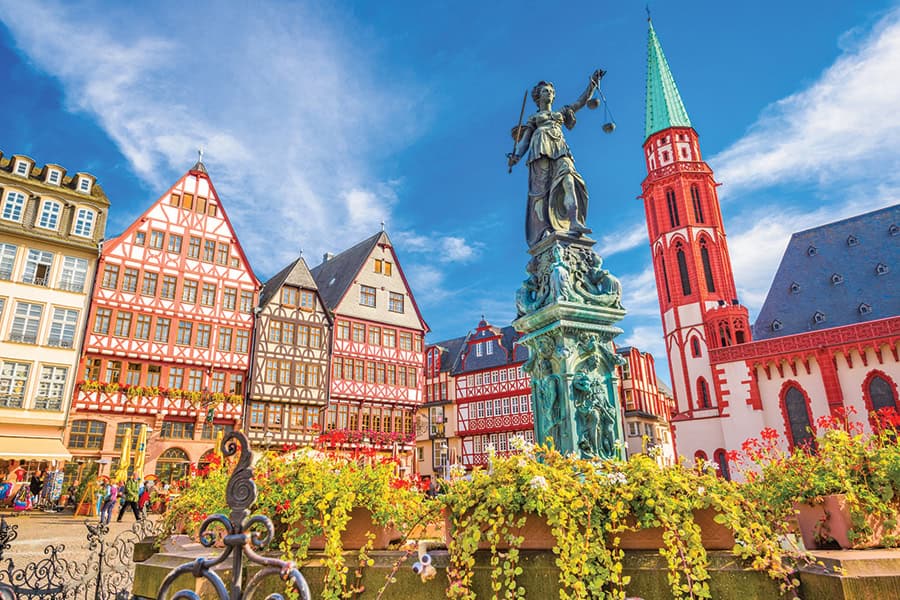
Frankfurt’s history stretches back over 1,200 years, with origins as a significant medieval trading center. The city played an important role in the Holy Roman Empire, serving as a place where emperors were elected and crowned. Despite heavy destruction during World War II, Frankfurt meticulously restored landmarks such as Römerberg, St. Bartholomew’s Cathedral, and the Old Opera House, preserving its historical character. Culturally, Frankfurt is home to renowned museums along the Museumsufer, including the Städel Museum, one of Germany’s most prestigious art institutions. The city’s literary legacy is highlighted by its most famous native, Johann Wolfgang von Goethe, whose birthplace is now a museum.
Modern Architecture
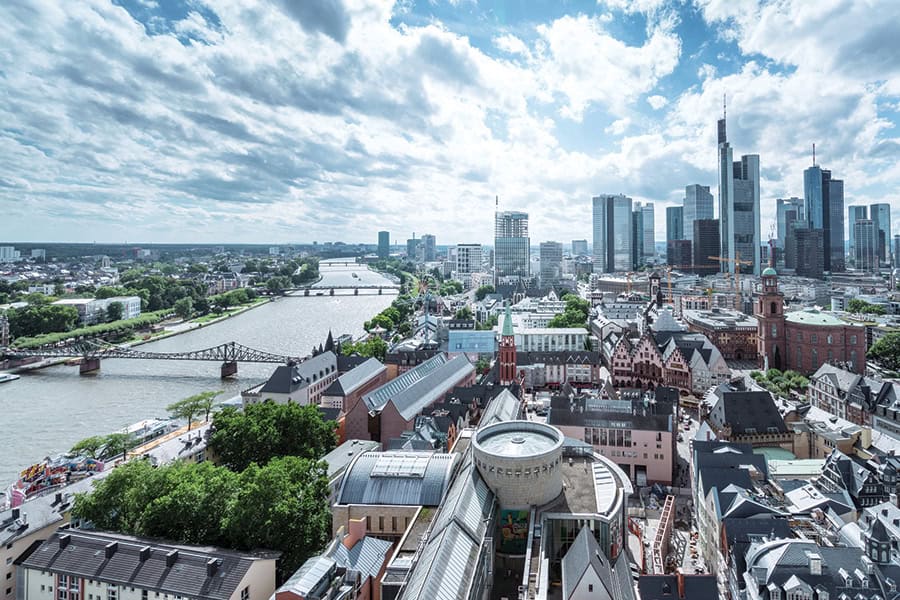
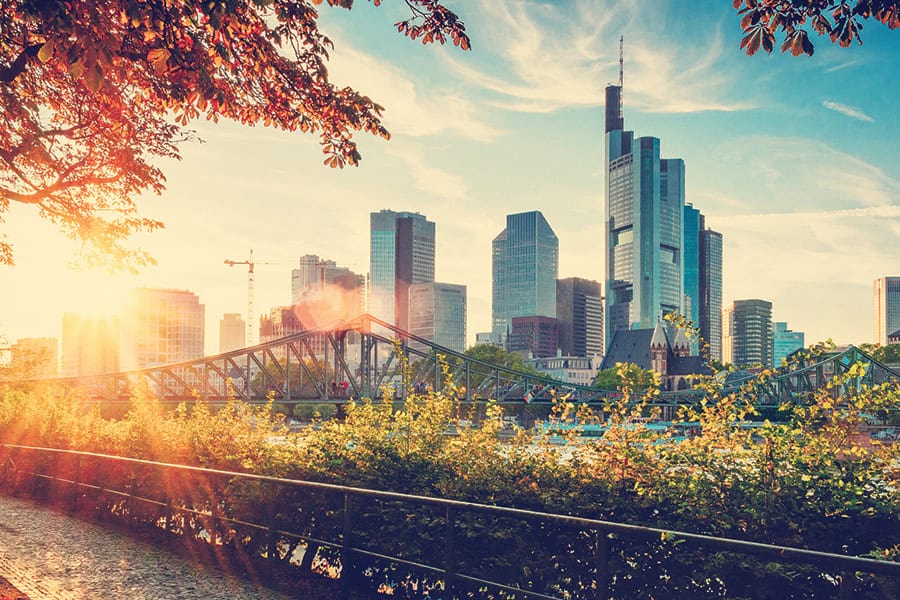
Frankfurt is uniquely recognized for its modern skyline — a rarity in European cities. Iconic skyscrapers such as Commerzbank Tower, Messeturm, and the European Central Bank headquarters stand alongside restored medieval streets. The city’s urban design reflects Germany’s forward-looking approach, integrating sustainable development, contemporary architecture, and expansive public transportation. The contrast between the steel-and-glass Financial District and the reconstructed Old Town creates a distinctive and memorable cityscape.
Cuisine
Frankfurt’s culinary scene is a blend of traditional Hessian dishes and diverse international flavors. Classic local specialties include Handkäse mit Musik, Grüne Soße (a herb-based green sauce), and Apfelwein (apple cider), typically enjoyed in the traditional taverns of Sachsenhausen. Alongside these, the city offers gourmet restaurants, artisan bakeries, specialty coffee shops, and food markets such as the Kleinmarkthalle, where visitors can sample regional products and global cuisine under one roof.
Parks and Nature
Despite being a major financial center, Frankfurt features abundant green spaces. The Palmengarten botanical garden, the tranquil Bethmannpark, and the riverside pathways along the Main offer peaceful retreats within the city. The extensive Grüneburgpark near the university district is a favorite spot for picnics, walks, and outdoor activities. The riverbanks, lined with trees and open spaces, provide scenic routes for cycling and strolling.
Climate
Frankfurt has a temperate seasonal climate, with mild to warm summers and cool, often damp winters. Autumn brings colorful foliage and crisp air, making October an atmospheric time to explore the city. Days are cooler and shorter, with frequent light rain, creating a cozy setting for enjoying museums, cafés, and riverside walks.
Economy and Innovation
Frankfurt is one of Europe’s leading financial hubs, hosting the European Central Bank, the German Stock Exchange, and numerous international banks. The city’s Messe Frankfurt fairgrounds host some of the world’s largest trade events, including the Frankfurt Book Fair and major industry exhibitions. Alongside finance and trade, Frankfurt’s growing tech and research sectors contribute to its reputation as a center of innovation and global business.
Frankfurt offers a unique blend of historical richness, modern ambition, and cultural vibrancy. Its combination of medieval heritage, contemporary architecture, green spaces, and cosmopolitan energy makes it a compelling and multifaceted destination in the heart of Europe.